




Muntjac Deer Stalking
Available throughout the year, Muntjac stalking offers a unique challenge. Their elusive nature and preference for dense woodland reward patience, fieldcraft and accurate shooting.
MUNTJAC DEER
(Muntiacus reevesi)
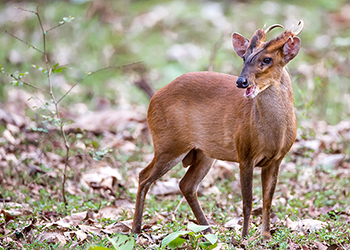
The Reeves' Muntjac is Britain's smallest deer species and one of its most fascinating. Secretive, elusive and perfectly adapted to dense woodland, Muntjac offer a unique stalking experience that rewards patience, observation and careful fieldcraft.
Originally introduced to Woburn Abbey in Bedfordshire during the late nineteenth century, Reeves' Muntjac have become firmly established throughout much of Southern England. Unlike any other British deer species, they are capable of breeding throughout the year, making sustainable population management essential and allowing stalking opportunities to be enjoyed in every month of the year.
Capreolus Club offers professionally guided Muntjac stalking on carefully managed private sporting estates throughout Southern England, providing exceptional opportunities for both experienced stalkers and those new to deer management.
Habitat & Behaviour
Muntjac favour dense woodland, scrub, young plantations and overgrown hedgerows where their secretive behaviour and remarkable ability to remain unseen make them one of Britain's most challenging deer species to stalk.
Unlike the larger herding deer, Muntjac are generally solitary animals, moving quietly through thick cover and often appearing only briefly before disappearing back into woodland.
Notable for their distinctive barking alarm call, prominent canine tusks and small antlers, Muntjac are considered one of the world's most primitive deer species and provide an absorbing stalking challenge throughout the year.
Why Stalk Muntjac in the UK?
Muntjac stalking offers a completely different experience from stalking Britain's larger deer species.
Often involving close-range encounters in dense woodland, successful Muntjac stalking demands quiet movement, careful observation and accurate rifle shooting. High seats are frequently used, although traditional woodland stalking through carefully managed habitat can be equally rewarding.
As Muntjac breed continuously throughout the year, effective population management plays an increasingly important role in protecting woodland biodiversity, ancient woodland flora and sensitive habitats across Southern England.
Open Seasons
| Country | Bucks | Does |
|---|---|---|
| England & Wales | 1 January – 31 December | 1 January – 31 December |
| Scotland | Not present in the wild | Not present in the wild |
Muntjac have no statutory close season in England and Wales, allowing professionally managed stalking to take place throughout the year in accordance with best practice and responsible deer management.
Muntjac Stalking with Capreolus Club
Capreolus Club offers professionally guided Muntjac stalking across a number of carefully managed private sporting estates throughout Southern England.
Whether you are looking to stalk your first Muntjac, experience the challenge of woodland stalking or simply enjoy a fascinating day's deer stalking at any time of year, our experienced team can arrange a bespoke outing tailored to your individual requirements.
Members also benefit from exclusive Club stalk days, offering an enjoyable opportunity to experience this unique and increasingly important deer species alongside fellow members.
To find out more about forthcoming Muntjac stalking opportunities, please visit our Trips & Events page or contact the Club Office to discuss your requirements.
 BACK TO ALL BESPOKE TRIPS